Without vibrant rural areas – no vibrant agriculture
Full seminar at the Rural Parliament on the future and importance of the Leader method
How is a viable agriculture connected to local engagement and collaboration? That was the main question when Local Development Sweden organized a full seminar during the Rural Parliament. With a focus on the Leader method, the panel discussed how sustainable rural areas are built – together.
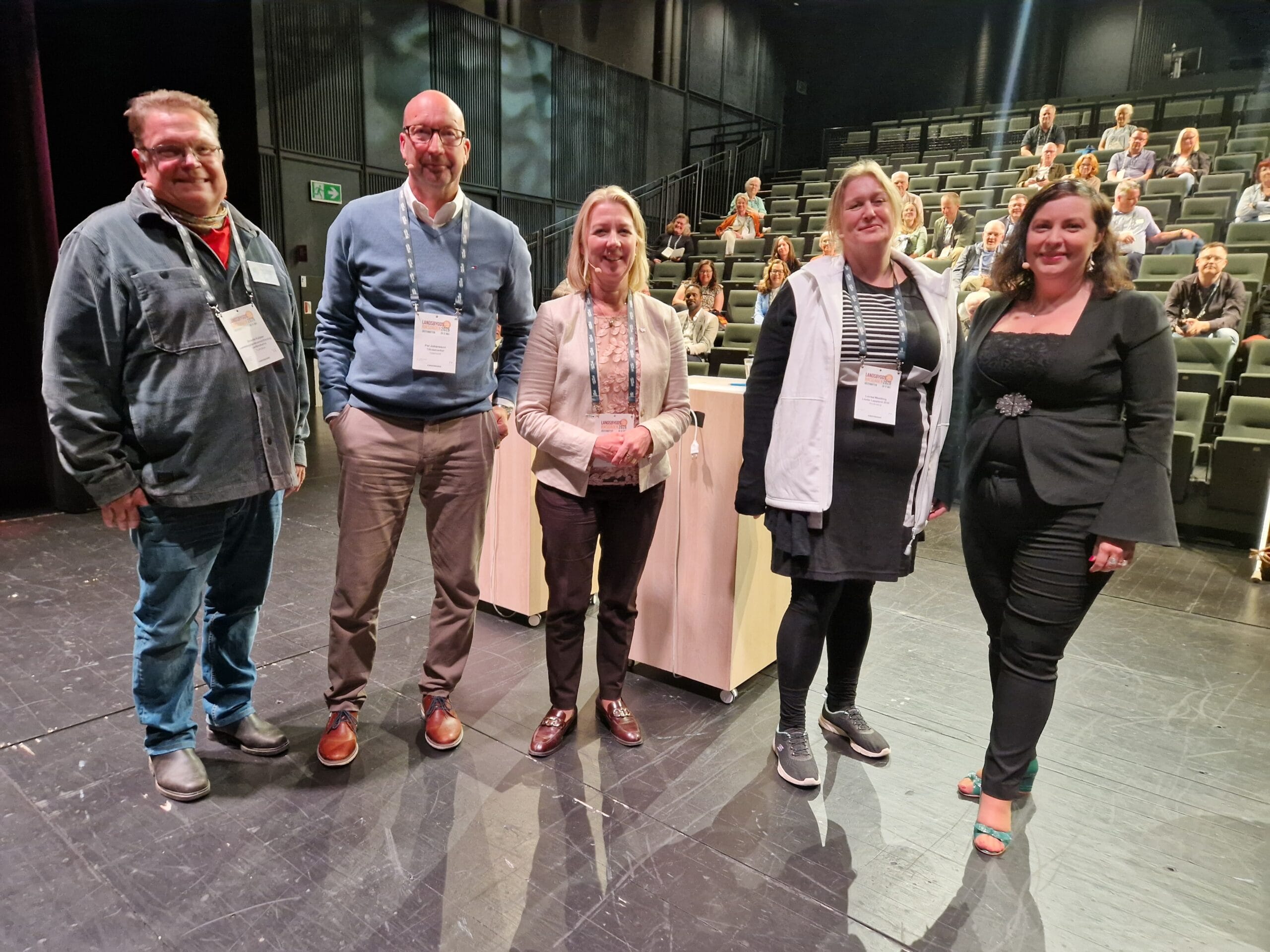
The seminar was moderated by Terese Bengard and gathered Anna Olofsson, Director General of the Swedish Board of Agriculture, Lovisa Westling, Vice Chair of Local Development Sweden, Svante Kaiser from the Ecological Farmers, and Per Johansson from the Swedish Agency for Economic and Regional Growth.
Leader as a driver for local development
The starting point for the conversation was the role of the Leader method as a driving force for local development. The method was highlighted as an important prerequisite for creating growth, but also for strengthening services, meeting places, collaboration, and future confidence throughout the country.
The panel was unanimous: a vibrant countryside is not created by a single actor – but through cooperation among many.
The future: Leader remains, but what does it look like?
The question of the Leader method's role in the next EU program period (2028–2034) was in focus.
Anna Olofsson sees it as unlikely that Leader would disappear: – Leader should be mandatory, but there is currently no earmarked budget.
How the method will be concretely shaped will be decided politically. The Swedish Board of Agriculture has been tasked with preparing a decision basis by autumn 2026.
She simultaneously points to the need for change:
- the financing and administration need to be reviewed
- long processing times have been a problem, but are now addressed
At the same time, she opens up for the possibility that Leader could be used more broadly in the future than today.
“A bridge between sectors”
Lovisa Westling highlights Leader as a unifying force: – Leader is a bridge between the various sectors of society and the development of rural areas.
She emphasizes the importance of synergies and that the work must be intensified now, in a time of great changes.
Svante Kaiser, in turn, highlights resource allocation: – You cannot just support agriculture, as that risks happening at the expense of other local development.
What does Leader mean to you?
When asked what Leader means to them, the answers were concrete and personal.
Lovisa Westling describes Leader as a way to harness local engagement: – “Nobodysism” died – and someone else took charge. Leader gives people the opportunity to develop their place, but it requires financing.
Per Johansson highlights the authority perspective: – We work to create conditions for implementation and to explain reality to authorities. Leader is a good example of how it can work.
He also emphasizes the importance of organizing and influencing together.
Svante Kaiser notes that many farmers do not have a natural connection to Leader today – but that the potential is great: – I absolutely could not manage without a vibrant local community.
He particularly highlights values such as preparedness and robustness – things that cannot always be measured in numbers.
Long-term perspective and clear rules
A recurring question during the seminar was the need for long-term thinking.
Lovisa Westling calls for:
- stable regulations that do not change over time
- clear and understandable structures
- conditions for local engagement in a sustainable way
Attractiveness and context
The panel also highlighted how Leader contributes to making rural areas more attractive.
According to Svante Kaiser, it is about context: – Agriculture becomes lonely without a vibrant local community. One needs a context where people together create a place.
What would happen if Leader did not exist?
Several in the panel pointed to the risks of phasing out Leader.
- Lovisa Westling: The drive in people remains, but without structure, engagement risks losing momentum
- Anna Olofsson: Investments in Leader signal that rural areas are prioritized
- Per Johansson: Without Leader, development in the country risks becoming more inefficient and fragmented
Should Leader exist throughout the country?
The answer from the panel was clear: yes.
At the same time, it was emphasized that different parts of the country have different conditions. Rural areas should not be pitted against each other, but given the opportunity to develop based on their own terms.
Anna Olofsson connects the question to broader perspectives: – Leader is a tool in community development, linked to robustness, resilience, and preparedness.
This is what I wish for!
Finally, the participants were asked to summarize what they wish for or from Leader moving forward:
- Svante Kaiser: The innovative power in Leader!
- Per Johansson: better connection between the Leader method and other processes at the Swedish Agency for Economic and Regional Growth
- Lovisa Westling: Leader across the country, earmarked budget, simplified bureaucracy and long-term perspective
- Anna Olofsson: stronger connection between agriculture and rural development, that together with the Swedish Agency for Economic and Regional Growth we can work to support rural development throughout Sweden, and a simpler implementation