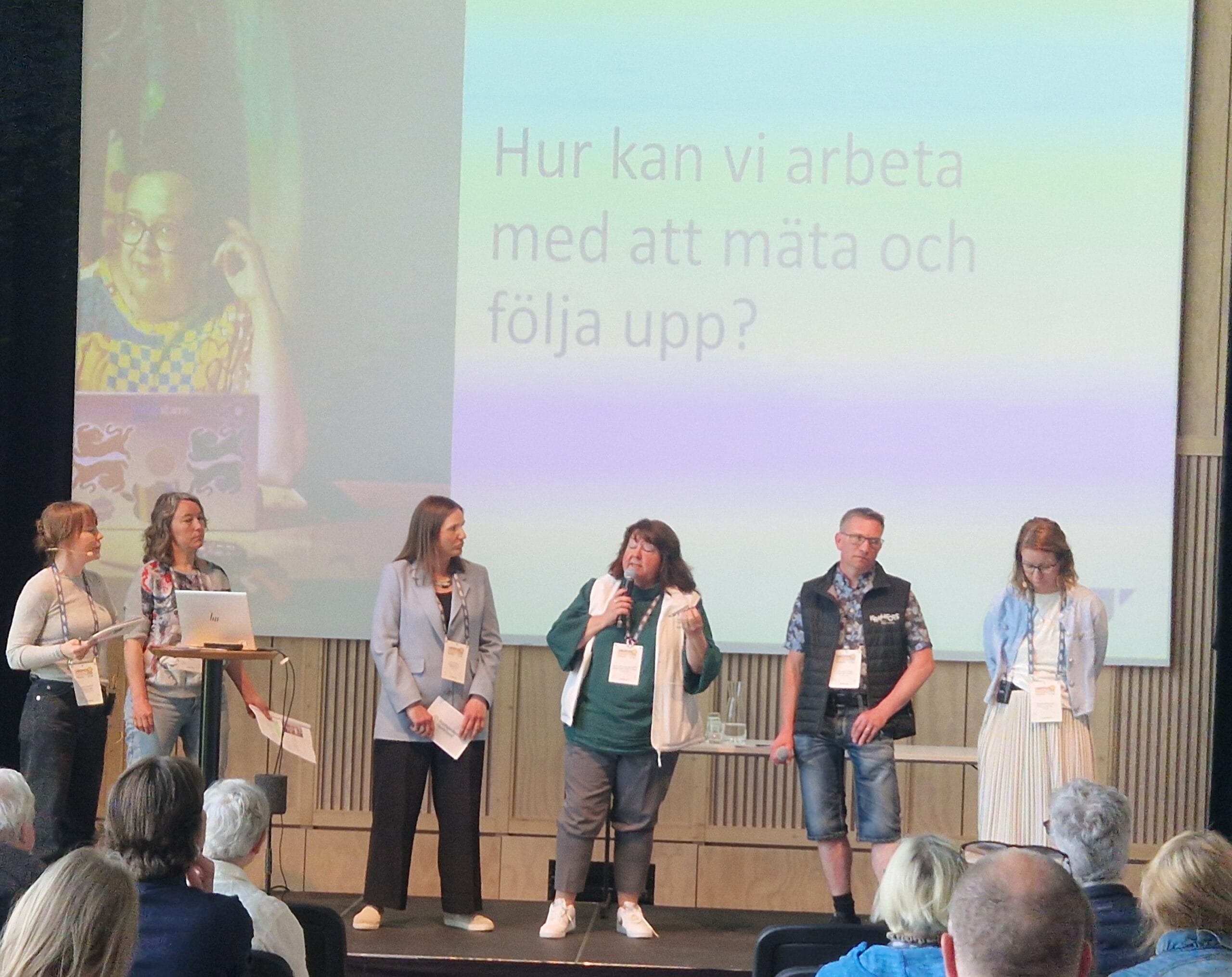
Speakers/contributors: Carin Persson and Evelina Selander (Swedish Agency for Economic and Regional Growth), Veronica Strandh (Umeå University), Andreas Gylling (Kramfors Municipality), Anna Öhman (Federation of Community Centers), Ann-Charlotte Thörnblad (Local Development Sweden)
The role of civil society in rural development and preparedness
According to a study by WSP, civil society contributes with community-supporting values through voluntary engagement and associations – values that are not always visible in economic measures. In 2019, over 4 million voluntary efforts were made, corresponding to approximately 735 million hours.
Veronica Strandh (Umeå University) highlights the central role of civil society in crisis preparedness. Civil society contributes to managing crises and strengthening local resilience. Preparedness is about enhancing the community's willingness and ability to act. Civil society often compensates for the absence of the state, and there is a “bubbling of local development energy,” even though resources, mandates, and long-term structures are sometimes lacking. In crises, civil society often acts as the first response, especially in areas with long distances and limited services. Physical meeting places and local self-sufficiency are central resources.
Collaboration and working methods
The breadth of civil society needs to be better utilized, which is also highlighted as part of the Leader method.
The value of civil society
The panel discussed, among other things, ”Why, when, and for whom do we need to describe the values of civil society?”
The need arises particularly in decisions, financing, and policy. At the same time, the challenge is that many values are difficult to measure.
”It's a bit jarring when you need to translate our value and people's commitment into numbers,” notes Ann-Charlotte Thörnblad, chairwoman of Local Development Sweden.
Working with and following up on values
To make civil society's efforts visible, the following is needed:
- focus on both results and process
- clarification of activities
- transparency and pride
It is not enough with “hard numbers” – stories and qualitative values need to be included. At the same time, there is uncertainty about which values carry the most weight in calls and assessments.
Storytelling and use of results
Storytelling is highlighted as a central tool for making results understandable and useful. It is crucial not only to measure but also to understand how the results can be used in practice.
Need for development
There is a clear need for methods that can make both measurable and immeasurable values in civil society visible.
Goals and ways forward
What do we want to achieve, and how do we get there?
Working methods and processes are crucial – and it is the path to the goal that creates the conditions. The work needs to be simple, clear, and relevant.
Veronica Strandh, Umeå University, emphasizes that the significance of the place is crucial. Local conditions affect which solutions work and must be taken into account in all development work.
Concluding reflection
The seminar shows that the contribution of civil society to rural development is absolutely essential for preparedness and resilience throughout Sweden and not just in the cities. To make the value of civil society visible, a combination of methods, stories, and collaboration is required.